Giving Football and Sport a Home

Designing sports facilities and stadiums as places of identity and innovation.

Stadiums are no longer isolated objects, but complex urban “machines” that must embody identity and history while generating relationships and new economies. Studio Lauria Network has developed significant experience in sports architecture across different settings and scales: from its work on Florence Stadium as part of the team led by Kengo Kuma, to the redesign of the Coverciano Federal Technical Centre and the competition for Naples’ Collana Stadium.

These experiences demonstrate a method founded on integrated design and supported by BIM processes, with equal attention to architectural, structural and building-services requirements in order to combine functionality with the quality of public space. Sport demands performance, safety, clear flows, accessibility, comfort and a strong image. Every project is therefore developed as a complex system in which architecture, engineering, sustainability and management come together.

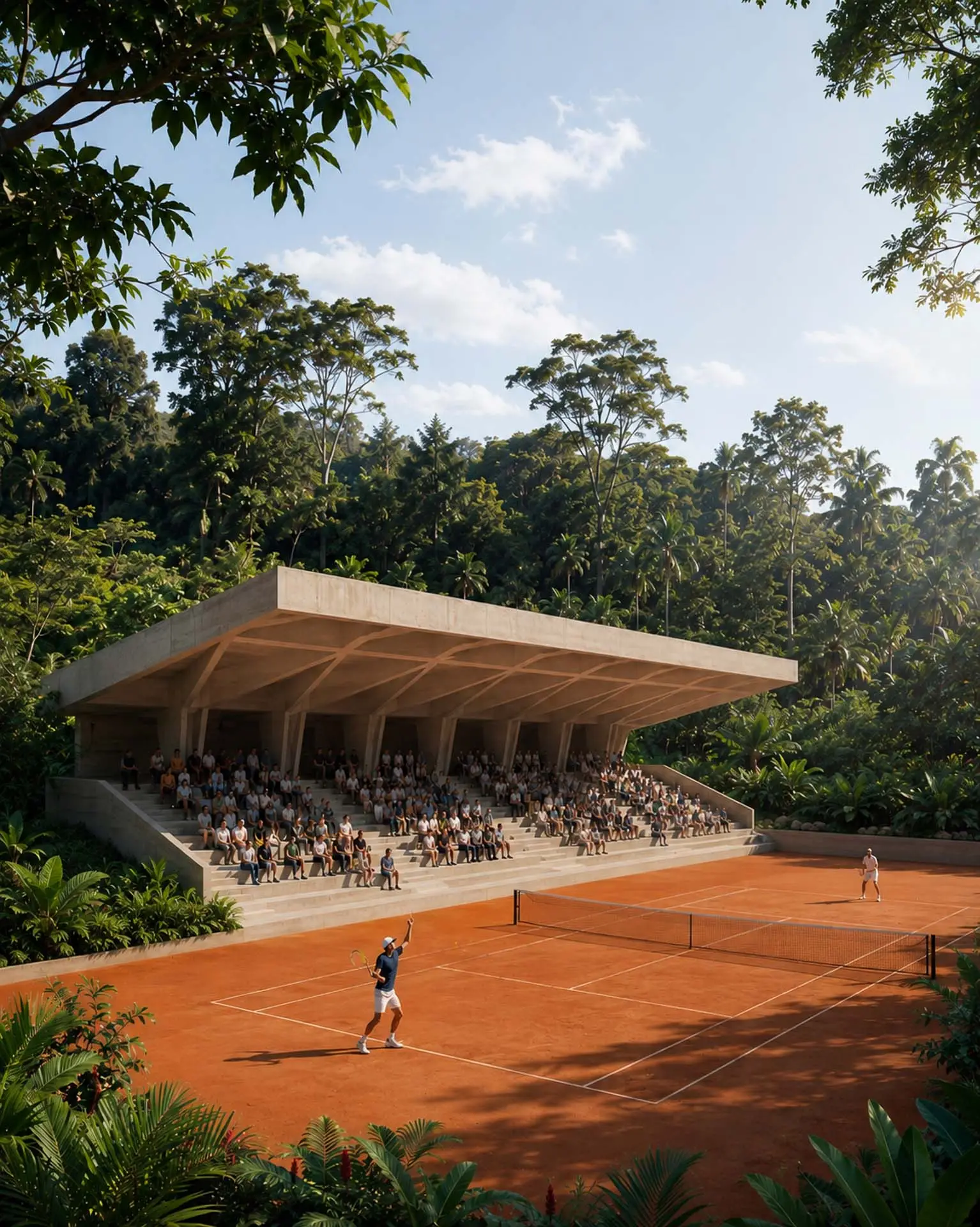
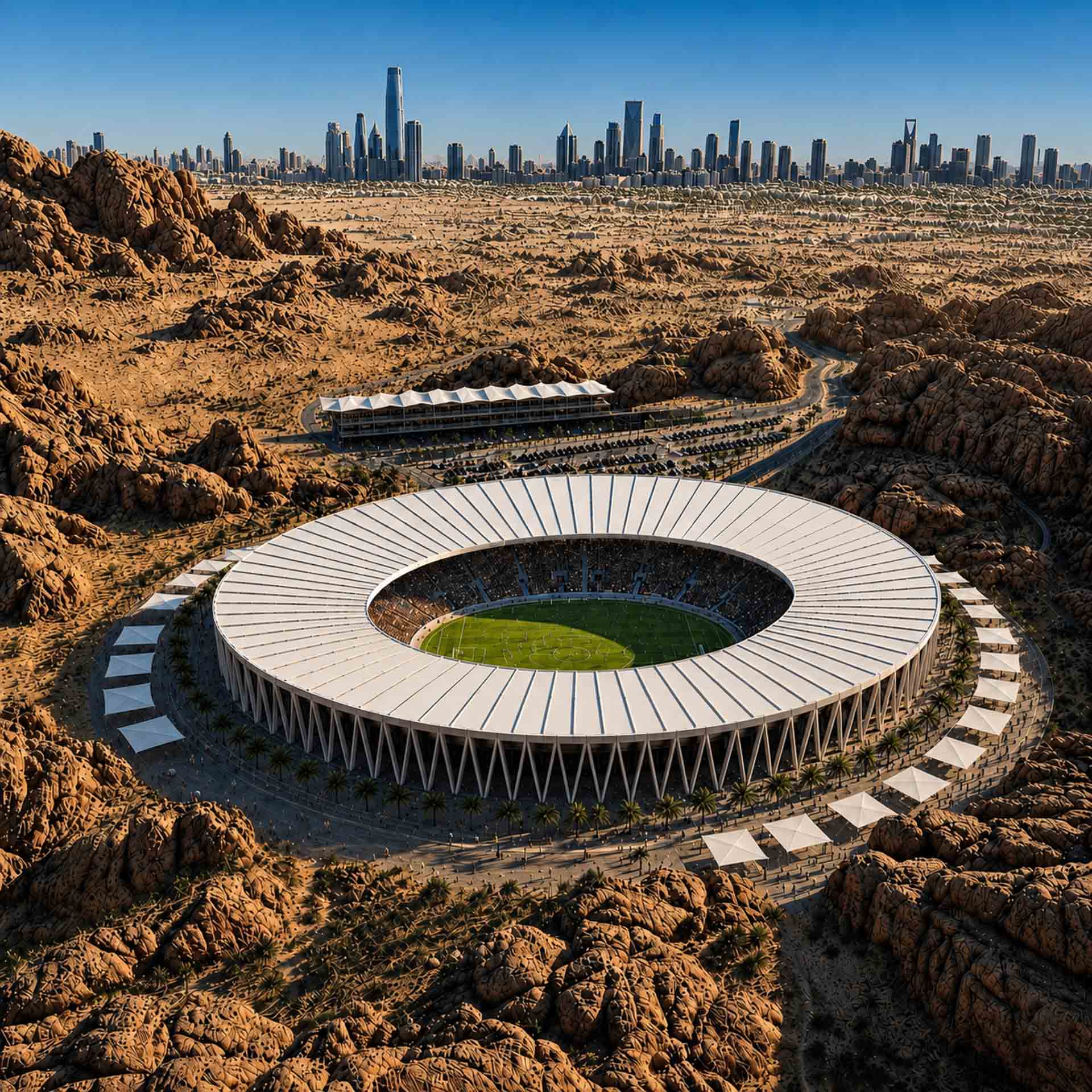
New international opportunities, including concepts for Brazil and Saudi Arabia — where the practice has designed a new 60,000-seat stadium — confirm a clear direction: designing a contemporary stadium means creating a civic, flexible and recognisable infrastructure that remains alive every day, not only during events. In competitive markets, this vision enables investors, federations and public authorities to deliver high-performance, sustainable facilities aligned with the evolution of their cities.


RELATED ARTICLES

Bromelia!
Multifunctional street furniture for tangible sustainability.
“Bromelia” began as a piece of multifunctional street furniture, but its ambition is broader: to transform a service element into a small environmental, social and symbolic infrastructure. Inspired by the bromeliad, a plant capable of collecting and retaining water, the structure interprets nature not as decoration but as an operational model.
Libraries, Theatres and Spaces for Music
Cultural venues as protagonists of new urban relationships.
Libraries, theatres and music venues are places where architecture becomes a collective experience. They are not simply containers for functions, but urban devices capable of generating knowledge, relationships and identity. Studio Lauria Network has addressed these themes in very different contexts, always focusing on perceptual quality, technical precision and the relationship with the community.
Large Residential Developments
Designing places to live, from private domestic space to the urban scale.
Residential design is one of the fields in which architecture most directly demonstrates its ability to influence quality of life. For Studio Lauria Network, designing homes means creating relationships: between inside and outside, residents and landscape, private space and collective life.

Aware of the challenges of globalisation, we draw on Italian creativity to develop projects that respect and enhance local identities and cultures.